As part of the Horizon Europe project HAlMan, WIT Berry was responsible for the development, coordination, and launch of an interactive 3D experience designed to present the project’s innovative and sustainable manganese production process to wider audiences.
The experience offers users an accessible and visually engaging way to explore how manganese – a critical raw material essential for steel production, infrastructure, transportation, and batteries for electronic devices and electric vehicles – can be produced through a more sustainable and low-carbon process.
Today, conventional manganese production relies on carbon-intensive pyrometallurgical methods that require high energy input and generate significant CO₂ emissions. The HAlMan project aims to rethink this process by replacing carbon with hydrogen and secondary aluminium sources as reductants. By combining hydrogen-based pre-reduction of manganese ores with aluminothermic smelting, the project seeks to significantly reduce emissions while enabling the valorisation of secondary raw materials and industrial by-products.
The innovative approach developed within HAlMan has the potential to deliver:
- low carbon footprint
- reduced energy consumption
- no solid waste generation
- improved use of secondary raw materials
The newly developed 3D experience allows users to explore the entire HAlMan process step by step – from raw material extraction and hydrogen pre-reduction to final alloy production – making complex metallurgical processes easier to understand for industry stakeholders, researchers, policymakers, students, and the general public.
Translating complex metallurgy into an engaging story
One of the main challenges of the project was understanding and communicating the highly technical HAlMan process chain in a way that would remain scientifically accurate while also being understandable and engaging for non-specialist audiences.
WIT Berry worked closely with the project coordination team and technical experts from across the consortium to gather information about the different technological processes, pilot-scale trials, experimental campaigns, and industrial activities carried out within the project. This included hydrogen-based pre-reduction of manganese ores, aluminothermic smelting trials, processing of industrial by-products, and large-scale experimental campaigns conducted by project partners.
The development of the 3D experience required extensive coordination, multiple validation rounds, and careful planning to ensure that every visual element and process step accurately reflected the project’s scientific and industrial work.
In addition to developing the 3D experience itself, WIT Berry also organised and coordinated the launch communication campaign and guided online presentation of the experience, helping audiences better visualise and understand the HAlMan innovation process and its contribution to more sustainable metallurgy.
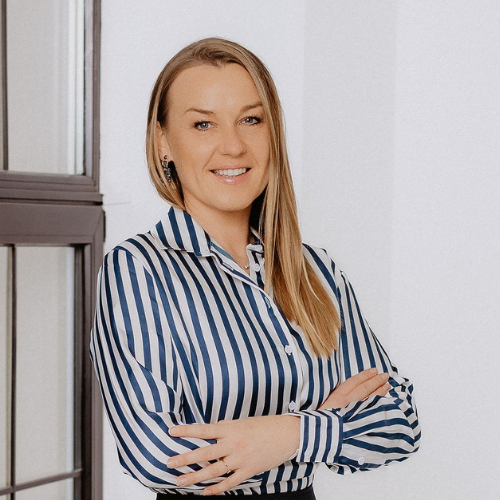
“The HAlMan project combines highly advanced industrial and scientific processes, which made this communication activity both challenging and exciting. Our goal was to create an experience that could transform complex metallurgical innovation into a clear and engaging visual story accessible to different audiences. Every stage of the development process involved close collaboration with the project partners to ensure scientific accuracy while making the experience intuitive and easy to explore.”
– Linda Kimeiša, Communication Manager, WIT Berry
The final result demonstrates how effective communication and digital storytelling can help make complex Horizon Europe innovations more visible, understandable, and accessible to society, while supporting Europe’s broader ambitions for decarbonisation, circular economy, and sustainable industrial development.
Experience the HAlMan process in 3D
Discover how the innovative low-carbon manganese production process works through an interactive 3D experience.
About the HAlMan project
The HAlMan project is Co-funded by the European Union. The project’s consortium is composed of 14 partners and 3 associated partners (AP), representing 10 countries. The project coordinator is Norwegian University of Science and Technology (Norway). Consortium partners are OFZ AS (Slovakia), Mintek (South Africa), SINTEF AS (Norway), WIT Berry (Latvia), National Technical University of Athens (Greece), Max-Planck-Institut für Eisenforschung GmbH (Germany), Advanced Minerals and Recycling Industrial Solutions (Greece), Centre for Research and Technology Hellas – CERTH (Greece), Mytilineos Anonimi Etaireia (Greece), CALIX Europe (France), CALIX LTD (Australia, AP), Spolka Akcyjna Odlewnie Polskie (Poland), Imperial College of Science and Technology and Medicine (United Kingdom, AP), MET4 (Greece), Transalloy PTY LTD (South Africa), Assmang (South Africa, AP). Project has started in January, 2023 and its duration is 4 years. Grant agreement ID: 101091936.